

Free financial coaching • Nonprofit • No commissions • 20+ years • 60K+ clients
Free financial coaching • Nonprofit • No commissions • 20+ years • 60K+ clients
How to Get Out of Debt: 5 Steps From a Financial Coach’s Playbook
Debt can feel overwhelming. You make payments every month, but the balances barely seem to move. Maybe you’ve tried budgeting before. Maybe you’ve promised yourself this would be the year you finally get ahead, only to find yourself relying on credit cards again after an unexpected expense.
If you’re trying to work through these struggles while living paycheck to paycheck and carrying debt, it’s easy to feel like you’re running on a treadmill, working hard without getting any closer to financial stability. Over time, that constant pressure can turn into financial anxiety, making it difficult to sleep, plan ahead, or feel confident about your future.
If that sounds familiar, you’re far from alone.
Millions of Americans carry some form of consumer debt. At the same time, many families are working hard just to keep up with monthly expenses. In fact, nearly 6 in 10 adults live paycheck to paycheck. Rising interest rates and the increasing cost of everyday essentials have made it harder than ever to make meaningful progress.
The good news? Getting out of debt isn’t about finding a secret strategy or making one perfect financial decision. It’s about understanding your options, creating a plan that works for your situation, and making steady progress over time.
At TrustPlus, our financial coaches have helped thousands of working people manage debt with confidence. The biggest lesson they’ve learned is this: sustainable progress comes from consistent habits you build over time, rather than a quick fix.
There isn’t one perfect strategy that works for everyone, but there are proven steps that can help you make steady progress and build momentum over time. Our financial coaches recommend focusing on the five steps below.
To get out of debt and reduce financial anxiety, establish a clear picture of what you owe, choose a payoff strategy that works for you, stop adding new debt, build a small emergency cushion, and work one-on-one with a free TrustPlus financial coach to stay on track.
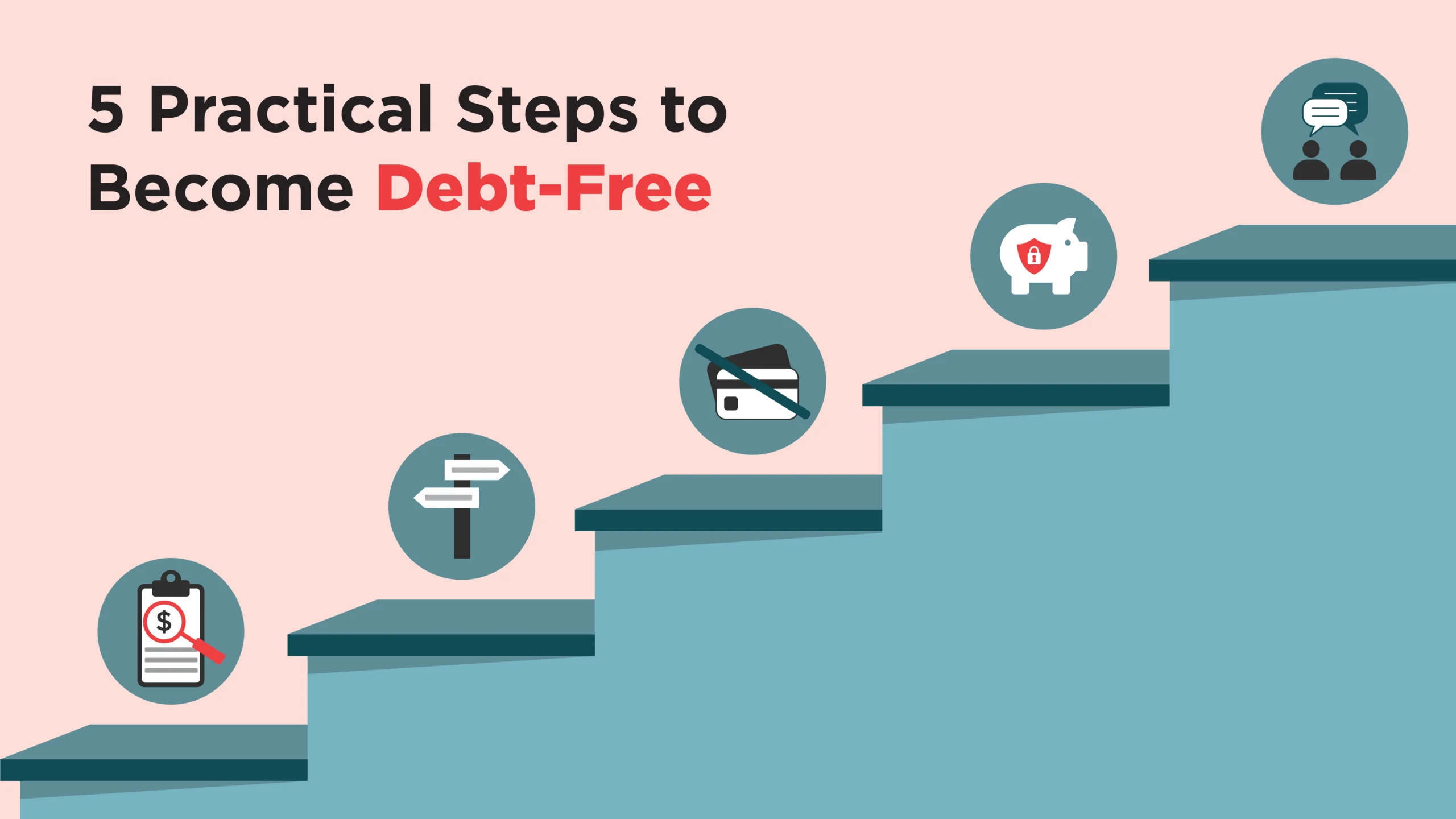
Five Practical Steps to Get Out of Debt
Step 1: Know Exactly What You Owe
One of the biggest drivers of financial anxiety is uncertainty.
Many people avoid looking at their financial statements because they’re afraid of what they’ll find. Others know they have debt but aren’t exactly sure how much they owe or which debt should be paid off first.
Our financial coaches encourage clients to replace uncertainty with clarity. Start by making a complete list of all your debts, such as:
- Credit cards
- Personal loans
- Auto loans
- Medical debt
- Student loans
- Buy Now, Pay Later balances
For each item in your list, write down the current balance, interest rate (also known as APR) and the minimum monthly payment. Seeing everything in one place can feel intimidating at first, but it also gives you something incredibly valuable: a starting point.
Many clients say their financial anxiety begins to ease once they have a complete picture because they finally know what they’re working toward instead of worrying about the unknown.
If you want to visualize what your balances are actually costing you in interest, using a free tool like the TrustPlus Debt Payoff Calculator is an excellent way to baseline your numbers.
Step 2: Choose a Payoff Strategy That Works for You
There’s no universal “best” way to pay off debt. Some people stay motivated using the snowball method, paying off the smallest balances first to build momentum. Others save more money with the avalanche method, paying extra toward the highest-interest debt first while making minimum payments on everything else.
Neither approach is right for everyone.
Our financial coaches help clients choose the strategy that fits both their numbers and their day-to-day reality. The most effective plan is the one that works for you and meets your needs.
Step 3: Stop Adding New Debt
One of the hardest parts of paying off debt is making progress while new balances continue to grow. That’s especially difficult for families living paycheck to paycheck, where credit cards often become a bridge between paydays rather than a convenience.
Our financial coaches encourage clients to pause new borrowing whenever possible. They help you build a plan that makes relying on credit less necessary over time.
Often that includes:
- Planning ahead for irregular expenses
- Reducing unnecessary subscriptions
- Identifying spending leaks without guilt
Debt payoff becomes dramatically easier when your balances are moving in only one direction: down.
Step 4: Build a Small Emergency Cushion
Many people think they should wait until they’re debt-free before saving money. Our financial coaches usually recommend the opposite.
Even a modest emergency fund of a few hundred dollars can make the difference between a temporary setback and another month of financial anxiety. Without savings, unexpected expenses often go straight onto a credit card, making it even harder to escape the paycheck-to-paycheck cycle.
Many people feel discouraged if they pause extra debt payments to handle an emergency. But that’s exactly why emergency savings exist. Using your savings instead of reaching for another credit card is financial progress. Once the emergency passes, you can simply resume your payoff plan.
The amount matters less than the habit. Automating even a small transfer from every paycheck to a designated savings account for emergencies creates protection that grows over time.
Step 5: Get a Financial Coach in Your Corner
Debt can feel isolating, especially when you’re dealing with financial anxiety or trying to stretch every paycheck.
Many people assume they should be able to figure everything out on their own, but financial decisions become much easier when you have someone helping you think through your options.
A TrustPlus financial coach isn’t there to judge your spending or sell financial products.
They’re there to help you:
- Build a realistic monthly budget based on your circumstances
- Create a personalized debt payoff plan
- Prioritize competing financial goals
- Reduce the stress that comes with financial uncertainty
- Stay motivated through setbacks
- Adjust your strategy as life changes
TrustPlus financial coaches work for Neighborhood Trust Financial Partners, a nonprofit organization with more than 20 years of experience helping working Americans improve their financial health. Because they don’t earn commissions, their guidance is focused entirely on what’s best for you.
Progress isn’t always about having the smallest debt balance or the highest income. More often, it comes from staying engaged, asking questions, and continuing to take small steps forward.
Ready to Take Control of Your Debt?
If you’re tired of feeling weighed down by financial anxiety, you don’t have to work through it alone.
Book a free session with a TrustPlus financial coach and build a personalized debt payoff plan designed around your real income, your real expenses, and your real goals. Together, you can create a roadmap that helps you reduce debt, build confidence, and create lasting financial stability.
Frequently Asked Questions
How long does it take to become debt-free?
Everyone’s timeline is different and depends on factors like your income, monthly expenses, total debt, and interest rates. While paying off debt can take months or even years, many people begin feeling more in control within the first three to six months of following a structured plan. The goal is steady, sustainable progress.
Can I get out of debt if I’m living paycheck to paycheck?
Yes. While it may take longer, it’s absolutely possible to make progress even if you’re living paycheck to paycheck. The key is creating a realistic plan that meets your needs, prioritizes your essential expenses, avoids adding new debt whenever possible, and builds momentum through consistent payments. Even small changes can add up over time.
How can I reduce financial anxiety while paying off debt?
Financial anxiety often comes from feeling uncertain or overwhelmed. One of the best ways to reduce that stress is by creating a clear picture of your finances and developing a realistic repayment plan. Knowing what you owe, setting achievable goals, and working with a financial coach can help you replace uncertainty with confidence.
Is TrustPlus financial coaching really free?
Yes. TrustPlus is offered at no cost to you. You’ll work one-on-one with a financial coach, real people who focus entirely on your personal goals. They work for Neighborhood Trust Financial Partners, a nonprofit with over 20 years of experience helping working Americans achieve their financial goals.

Written by the TrustPlus Financial Coaching Team
Reviewed by Rodrigo, Financial Coach
Written by the TrustPlus
Financial Coaching Team
Reviewed by Rodrigo,
Financial Coach



Follow Us