

Free financial coaching • Nonprofit • No commissions • 20+ years • 60K+ clients
Free financial coaching • Nonprofit • No commissions • 20+ years • 60K+ clients
Debt Snowball vs. Debt Avalanche: Which One Is Right for You?
If you’re trying to pay off multiple debts, figuring out where to start can feel overwhelming. It’s particularly challenging if you’re like the millions of Americans currently living paycheck to paycheck.
Should you focus on the smallest balance first? Focus on the debt with the highest interest rate? Keep making the minimum payments on everything? Or is there another approach that makes more sense for your situation?
Ultimately, the honest answer is: it depends. Everyone’s financial situation is different; and there isn’t one repayment strategy that works across the board.
Over more than 20 years of helping working Americans improve their financial well-being, TrustPlus financial coaches have learned two important lessons:
- There is no one-size-fits-all debt payoff strategy. The best plan is the one you can realistically stick with over time.
- People are more successful when they have a clear plan. Knowing exactly which debt to tackle next can replace uncertainty with confidence.
Two Ways to Pay Off Debt
The two most widely used debt payoff strategies are the Debt Snowball and the Debt Avalanche. Both can help you become debt free. They simply take different paths to get you there.
Curious to compare both strategies with your own numbers? Use the free TrustPlus Debt Snowball-Avalanche Calculator below. It compares your current repayment path, the Debt Snowball Method, and the Debt Avalanche Method side by side.
Prefer to understand the strategies first? Keep reading. We’ll explain how each method works and help you decide which approach is the best fit for you.
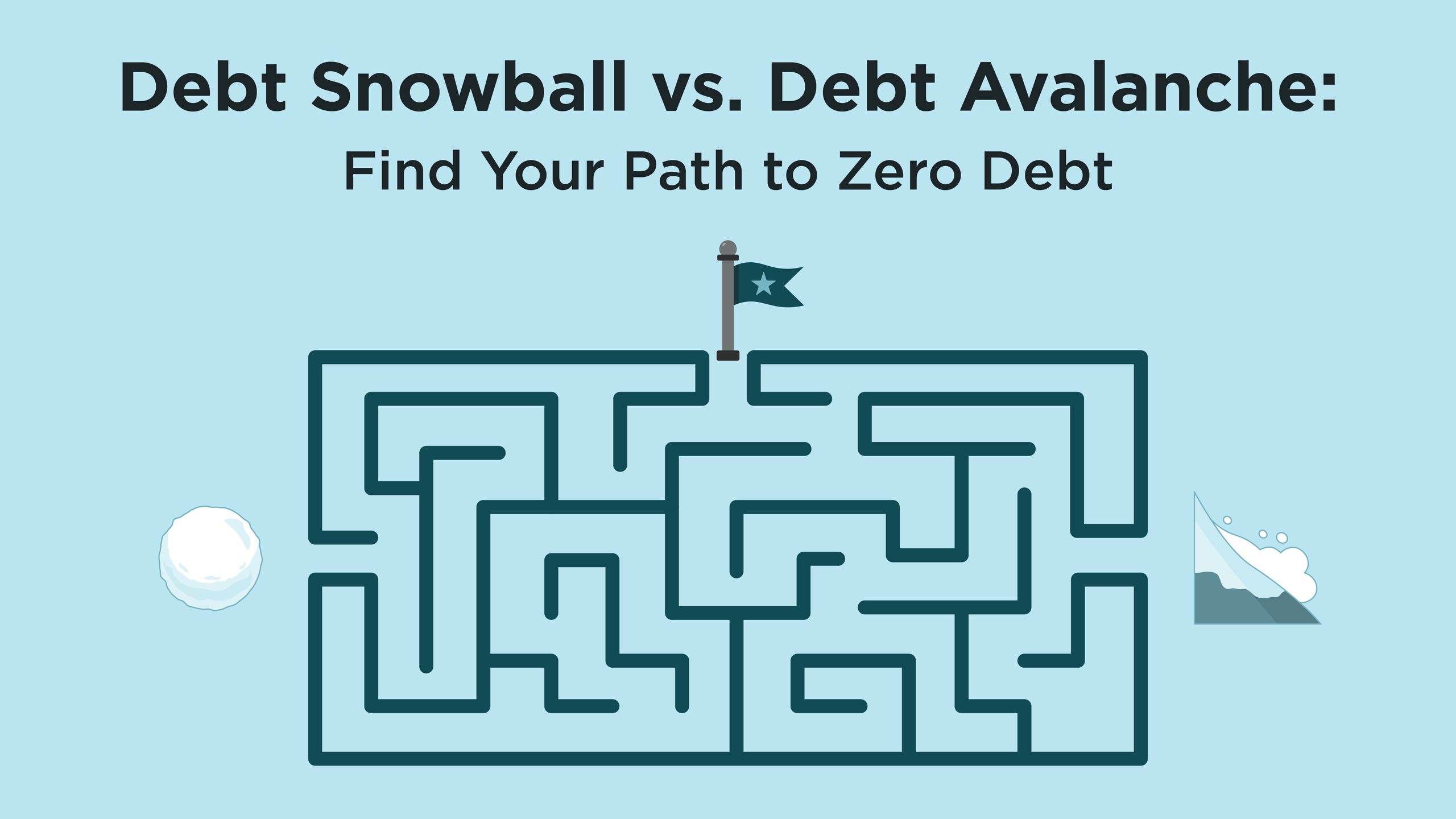
The main difference between the Debt Snowball and Debt Avalanche methods is which debt you pay first. Snowball targets your smallest balance to build momentum through quick wins, while Avalanche focuses on your highest-interest debt to save the most money. Ultimately, the best strategy is the one you’ll stick with.
Debt Snowball vs. Debt Avalanche: What’s the Difference?
No matter which of the two strategies you choose, the basic idea is the same.
- Keep making the minimum payment on every debt you have so your accounts stay in good standing with your creditors. This also prevents your credit score from dropping.
- Put any extra money you can toward one target debt, even an additional $10 can make a difference! Have a tight budget? Our free 5 Step Guide on paying off debt on a low income has effective strategies to help you stretch your dollars.
The Difference Is Which Debt You Target First
- Debt Snowball Method: You pay off your smallest balance first, no matter the interest rate. Once it’s gone, you roll that payment into your next-smallest balance. This method builds quick wins that keep you motivated. Want the full breakdown, including common mistakes to avoid? Read our complete guide to the Debt Snowball Method.
- Debt Avalanche Method: You pay off your highest-interest debt first, no matter the balance. Once you pay off this debt, roll that payment into the debt with the next-highest interest rate. This method saves you the most money in interest over time. You can usually find your credit card interest rate at the end of your statement. Look under the “Interest Charge Calculation” section. Want to dive deeper? Our complete guide to the Debt Avalanche Method is your one stop shop to learn everything you need to know about this debt reduction strategy.
Think of it this way: Snowball is about momentum and motivation. Avalanche is about maximizing savings in interest costs.
Whichever method you choose, try to avoid taking on new credit card debt while you’re paying down your existing balances. Otherwise, it can be difficult to make meaningful progress. We also recommend automating your payments so you never miss one.
See the Difference for Yourself: Free Comparison Calculator
Reading about these methods is one thing. Seeing your own numbers is another.
That’s why we built the TrustPlus Debt Snowball-Avalanche Calculator. Enter your balances, interest rates, minimum payments once, and any extra payment and the calculator will show you a side by side comparison between:
- Your Current Path: What happens if you only pay the minimums.
- Debt Snowball Method: How fast you could be debt-free by targeting your smallest balance first.
- Debt Avalanche Method: How much interest you could save by targeting your highest-interest balance first.
You’ll see your estimated payoff date and total interest paid for each path, so you can decide which approach fits your goals.
So Which Strategy is Better: Debt Snowball or Debt Avalanche?
This is where many people expect there to be a “right” answer. There isn’t. The best debt payoff strategy depends on what will keep you moving forward.
The Debt Snowball may be a better fit if you tend to get discouraged easily or feel motivated by checking debts off your list. Paying off smaller balances first can build confidence and create momentum, especially if you have several smaller debts alongside one or two larger ones.
The Debt Avalanche could be the way to go if your main goal is to pay as little interest as possible. It often makes the most “mathematical sense” when one or two of your debts have significantly higher interest rates than the rest, and you’re comfortable waiting longer for your first payoff.
Still not sure which strategy is best for you? That’s okay. There’s no universally “right” answer, and many people even switch strategies as their financial situation changes. The best repayment plan is the one you’ll actually stick with over time.
You Don’t Have to Do This Alone
While the Debt Avalanche Method can work for some people, and the Debt Snowball Method can work for others, there are additional ways to get out of debt. Every financial situation is different, and sometimes having someone to talk to can make it easier to figure out the best path forward.
Read our free guide, What Is Financial Coaching? to learn how a free TrustPlus financial coach can help you review your debts, build a realistic repayment plan, and develop habits that support long-term financial stability. Together, you’ll decide whether the Debt Snowball Method, the Debt Avalanche Method, or another approach makes the most sense for your situation.
Frequently Asked Questions
Is TrustPlus financial coaching really free?
Yes. We offer TrustPlus at no cost to you. You’ll work one-on-one with a real human financial coach who focuses entirely on your unique personal goals. They work for Neighborhood Trust Financial Partners, a nonprofit with over 20 years of experience helping working Americans achieve their financial goals.
Which debt repayment strategy is better: Debt Snowball or Debt Avalanche?
It depends on your specific situation. The Debt Avalanche Method will usually save you the most amount of money in interest. That said, the Debt Snowball Method will usually help you pay off a small balance quicker, resulting in quick wins. Both work.
Can I switch strategies?
Absolutely! Your financial situation isn’t static, and your repayment strategy doesn’t have to be either. As your income, expenses, goals, or debt change, it may make sense to adjust your approach. A TrustPlus financial coach can help you review your progress, evaluate your options, and decide which approach is the best fit for you.

Written by the TrustPlus Financial Coaching Team
Reviewed by Shanick, Financial Coach
Written by the TrustPlus
Financial Coaching Team
Reviewed by Shanick,
Financial Coach


Follow Us