
Free Financial Guide
Practical guidance on debt, credit, and everyday money questions, from people who understand what financial stress actually feels like.
How to Stop Living Paycheck to Paycheck: 5 Realistic Steps
If you’re stretching every dollar until payday, you already know how exhausting that feels. You might be frustrated. You might have tried things before that didn’t stick. That’s okay; and it’s more common than you think!

Nearly 6 in 10 Americans live paycheck to paycheck. It’s not a reflection of how hard you work or how smart you are. It’s often the result of wages that haven’t kept up with skyrocketing costs and a financial system that wasn’t built with working families in mind.
But here’s what our TrustPlus financial coaches hear from clients again and again: small, consistent changes make a bigger difference than any single dramatic move. This guide is built on what actually works. It’s drawn from real conversations between our financial coaches and the workers they serve every day.
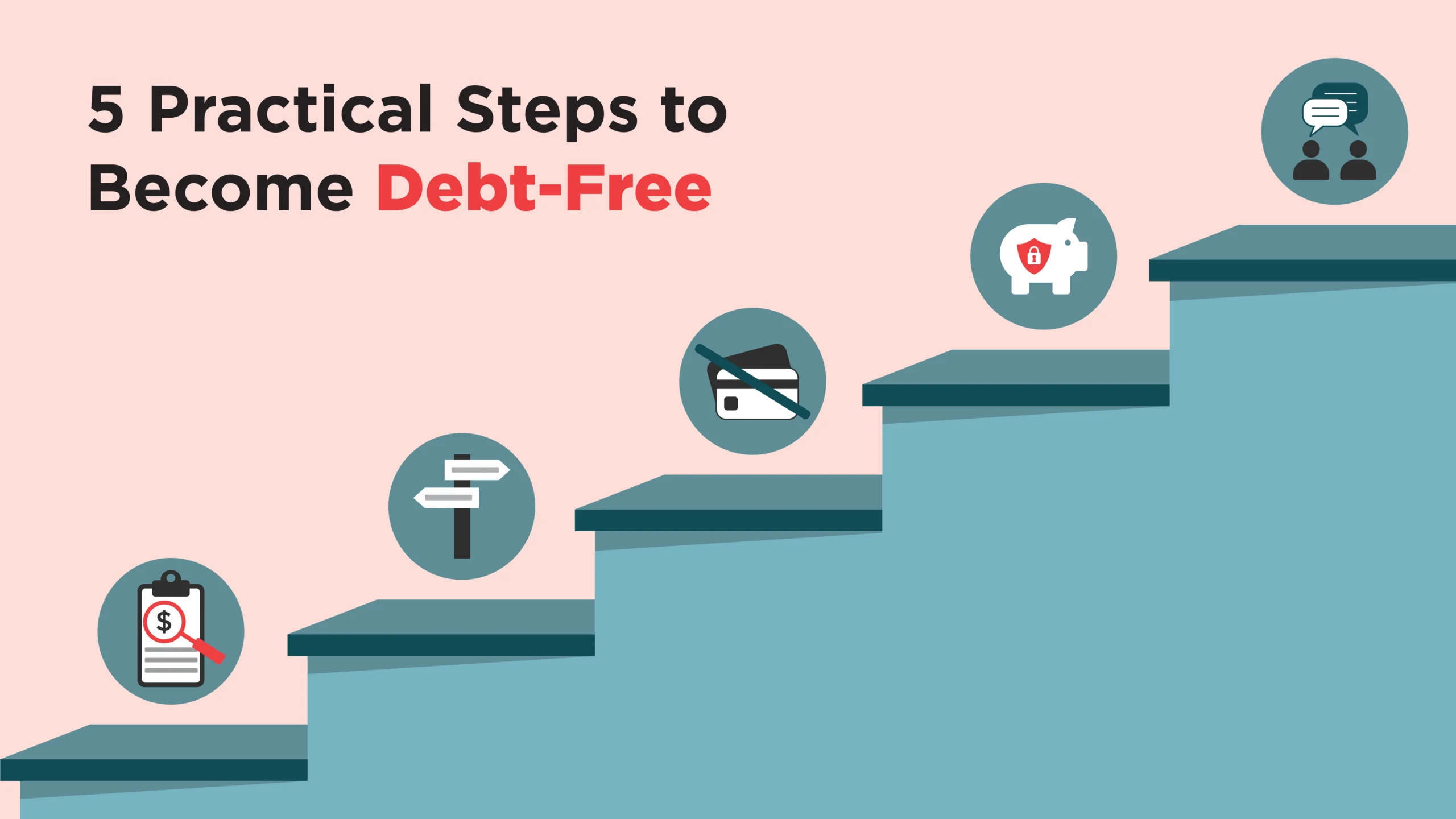
The short answer is that breaking the cycle can be achieved by following a clear path. To capture this momentum, living paycheck to paycheck can be broken into 5 strategic steps:
The 5 Steps to Financial Freedom
- Let go of the shame
- Track every dollar for 30 days
- Build a budget that’s honest and flexible
- Automate a $500 emergency cushion
- Get a free financial coach in your corner
Most people see meaningful change in 3–6 months.
Step 1: Let Go of the Shame
One of the most important things our financial coaches want you to know is this: living paycheck to paycheck doesn’t mean you’ve done something wrong. Most people who come to TrustPlus for help feel a mix of frustration, embarrassment, and resignation. They feel like they should have figured this out already.
But budgeting, debt management, and financial planning are skills. They can be learned at any age, at any income level. The fact that you’re reading this means you’re already taking the situation seriously. That matters!
Change also takes time; and that’s okay! Our financial coaches consistently emphasize patience: you didn’t end up here overnight, and lasting change doesn’t happen overnight either. What you’re looking for is momentum, not perfection.
Step 2: Track Every Dollar for 30 Days
Before making any changes, you need to see the full picture. Even people who feel like they completely know their spending are often surprised when they look at the numbers closely. Forgotten subscriptions, small daily purchases, and shifting bills easily slip through the cracks.
For one month, track every dollar in and every dollar out. You don’t need a complicated app. A notebook, a spreadsheet, or even your bank’s transaction history will do. The goal of this exercise is clarity without judgment. As our financial coaches put it, clarity opens up options you didn’t know you had.
When clients review their expenses, they sometimes uncover small recurring charges, spending habits, or fluctuating costs that are adding more pressure than expected. Other times, they confirm that the issue isn’t overspending at all—it’s that essential costs have become too high relative to income. Both insights are important.
Once you have a clear picture, look at your spending in categories: fixed expenses you can’t easily change (rent, utilities, loan minimums), variable necessities (groceries, transportation), and discretionary spending. The goal isn’t to shame any category, but to understand where flexibility may or may not exist within the realities you’re navigating.
Step 3: Build a Budget That’s Honest and Flexible
A budget isn’t a punishment. It’s an opportunity to make a plan for where your money will go. And the best budget is one you’ll actually use, which means it has to be realistic.
Our financial coaches are clear that budgets are dynamic. Life changes. Expenses change. Debts change. A budget that worked in January may need adjustment in March. That’s not failure; that’s how budgeting actually works! The key habit is reviewing it consistently at the beginning or end of each month, to plan for what’s coming.
Start simple: list your income, your fixed expenses, and your minimums on debt. What’s left is your breathing room. From there, decide where to allocate these funds.
Step 4: Automate a $500 Emergency Cushion
If there’s one thing our financial coaches agree on more than anything else, it’s this: a small emergency fund changes everything.
Even $500 in savings might not sound like much. But it’s the difference between a flat tire being an inconvenience and a flat tire sending you to a payday loan at 400% interest. It’s the buffer that keeps a temporary setback from becoming a downward financial spiral.
The key is consistency over size. Small amounts add up fast when they’re automatic. Saving $5–$10 from every paycheck builds a reliable cushion before that money ever hits your main account. Set up a separate account, automate the transfer, and let your savings grow in the background.
💡 Savings Lightbulb Moment: Our financial coaches often notice that clients get deeply discouraged when they finally build a small cushion, only for an unexpected emergency to force them to spend it right away. But here is a game-changing mindset shift to remember: we save money specifically so it is there to use when needed.
Pulling from your savings fund to handle a crisis is a massive financial victory. It means your buffer did exactly what it was designed to do, keeping you safe from high-interest debt traps! The key is to make sure to continue automatically saving into this fund to maintain consistency.
Step 5: Get a Free Coach in Your Corner
One of the most consistent things our financial coaches want readers to walk away with is simple: it’s okay to ask for help. Budgeting, debt management, and building savings is hard. It’s even harder without someone in your corner.
A TrustPlus financial coach isn’t a salesperson. They’re not trying to sell you a product or push you toward a decision that benefits someone else. In fact, they don’t earn commissions on any recommendation given. TrustPlus financial coaches work for Neighborhood Trust Financial Partners, a New York City based nonprofit organization with over 20 years of experience helping more than 50K working people achieve their financial goals. TrustPlus financial coaches are trained experts who work entirely in your interest; helping you understand your numbers, build a plan that fits your actual life, and stay on track when things get hard.
The clients who make the most progress aren’t necessarily the ones in the best financial shape when they start. They’re the ones who show up, ask questions, engage with the process and are willing to try one small thing at a time. That’s it. That’s the whole formula.
Ready to Take the First Step?
Book a free session with a TrustPlus financial coach. Get a personalized plan, built entirely around your real life, to help you build financial breathing room and stop living paycheck to paycheck.
Frequently Asked Questions
Is it really possible to save money when I’m barely making it work?
Yes, but it means starting very small and being consistent. Even $5–$10 per paycheck is deeply meaningful. The act of saving, more than the baseline amount, creates a behavioral habit and builds a cushion that protects you from falling back into debt spirals. Your TrustPlus financial coach can help you find a starting number that safely works for your specific budget.
How long does it actually take to break the paycheck-to-paycheck cycle?
There’s no single timeline. It depends heavily on your unique income, expenses, and current debt load. However, most clients who work with a financial coach and commit to small, consistent changes feel meaningfully different within 3–6 months: they establish a small savings cushion, see their debts start to shrink, and gain a feeling of control they didn’t have before.
What if I have bad credit or a lot of debt?
TrustPlus financial coaches work with clients at all credit levels and debt loads. Having bad credit doesn’t disqualify you from getting help; it’s often exactly why working with a financial coach makes the biggest difference. They’ll help you prioritize your bills and explore your options.
What’s the single most important first step?
Our coaches say it consistently: track your spending for one month. You can’t build a plan you’ll stick to without first understanding where your money is actually going. From there, everything else becomes clearer, including the first small change you can make.
Is TrustPlus coaching really free?
Yes. TrustPlus is offered at no cost to you. You’ll work one-on-one with a real human coach who is focused entirely on your unique personal goals. They work for Neighborhood Trust Financial Partners, a nonprofit with over 20 years of experience helping working Americans achieve their financial goals.


Follow Us